Use the lakehouse model to manage reliable data layers, Delta tables, governance and repeatable Databricks workloads. 1. Who can join Suitable for: Data engineers, PySpark developers and cloud analytics professionals Mandatory prerequisites: Python, SQL and introductory Spark/data-warehouse concepts 2. Duration 48 live hours • Approximately 8 weeks at 6 hours per week; actual timetable to be confirmed. 3. Mode Classroom - Thaiyur / Kelambakkam, OMR Chennai (subject to schedule) Live Online (subject to schedule)
4. Syllabus — five modules
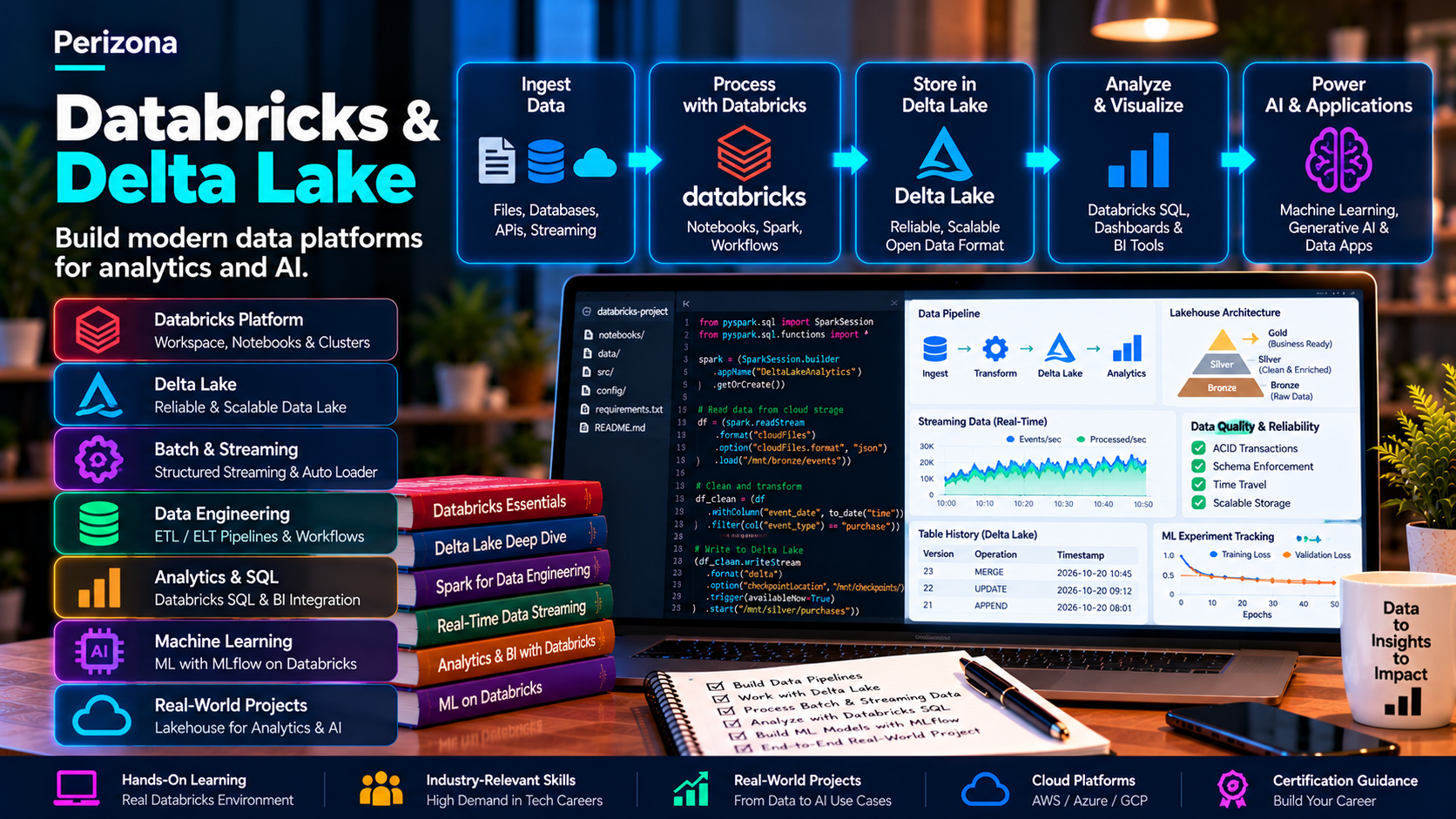
Module 1: Evolution of Data Storage: Data Warehouses vs. Data Lakes vs. Lakehouse Learning outcome: Compare warehouses, lakes and lakehouse patterns. Module 2: Delta Lake Core Capabilities: ACID Transactions, Time Travel & Schema Enforcement Learning outcome: Implement Delta Lake schema handling and time-travel exercises. Module 3: Databricks Workspace, Medallion Architecture (Bronze, Silver, Gold Layers) Learning outcome: Build Bronze/Silver/Gold transformations in a guided workspace. Module 4: Unified Data Governance & Security with Unity Catalog Learning outcome: Explain catalogue permissions and governed data access. Module 5: PySpark Optimization Strategies & Databricks Workflows Orchestration Learning outcome: Optimize representative PySpark transformations and configure a workflow. 5. Practical project Source capstone title: Construct a Medallion Architecture Data Lakehouse on Databricks Student deliverable: A sample medallion architecture with Bronze, Silver and Gold Delta tables, test data- quality rules and a queryable reporting layer.
6. What is included Live trainer-led sessions Practical assignments Sample code or templates, as applicable Project feedback Learning assessment Perizona course-completion certificate subject to assessment 7. Upcoming batch Start date: To be announced. Students can register interest; dates are shared only after confirmation.